
2026 General Conference Planning Update
Commission on General Conference Releases Key Details, with More to Come in Future Weeks
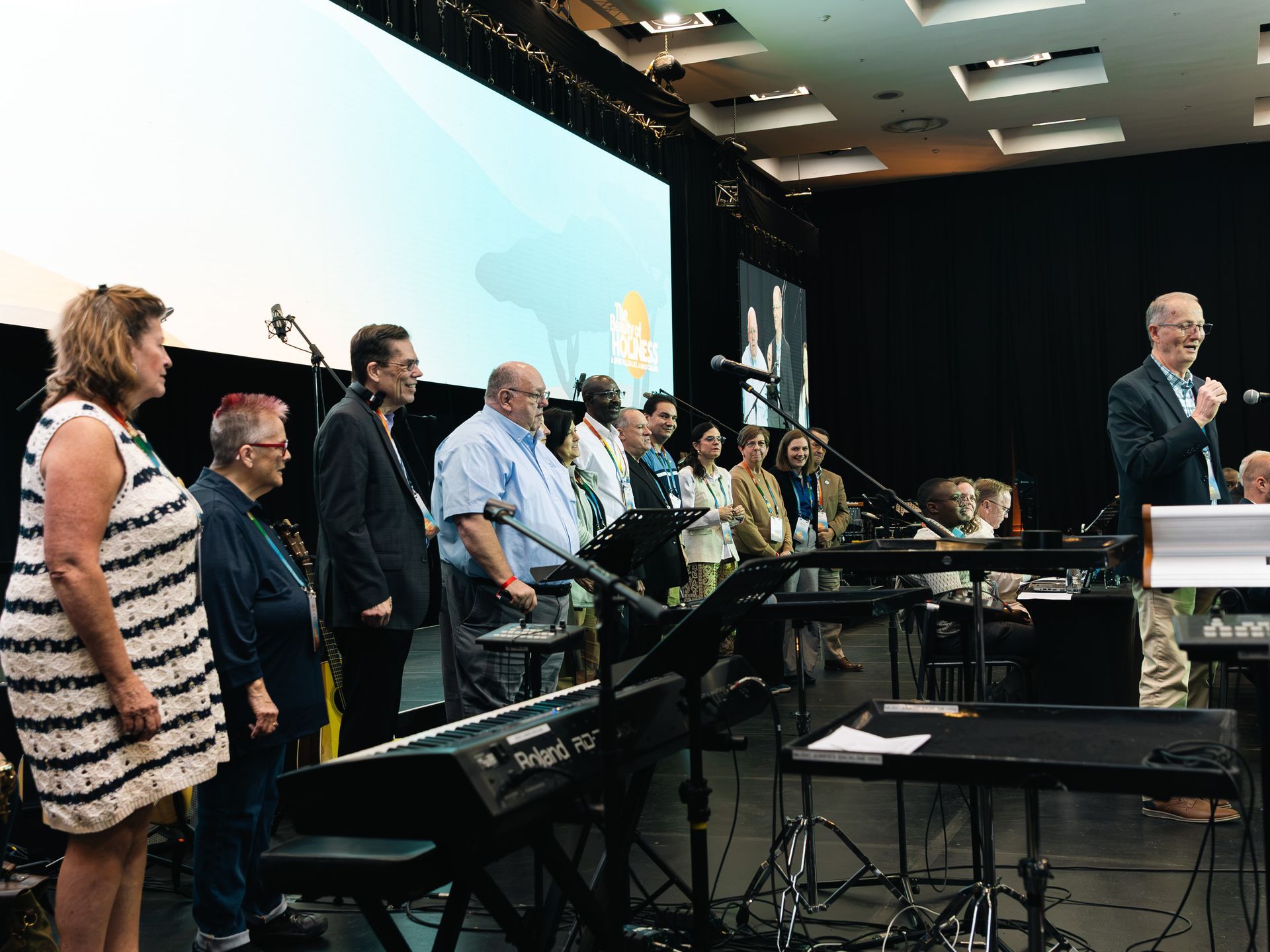
The Global Methodist Church is pleased to announce that the Commission on General Conference, under the leadership of Chair Rev. Mike Grant, Vice Chair, the Rev. Dr. Anthony McPhail, and Secretary, Stacy Taylor, is actively engaged in planning all aspects of the 2026 General Conference. As preparations move forward, the Commission anticipates releasing the location, dates, theme, and additional details in the coming weeks.
While many aspects of the event are still being finalized, the delegate allocation process and other key details have already been determined.
Change to In-Person Legislative Committee Meetings
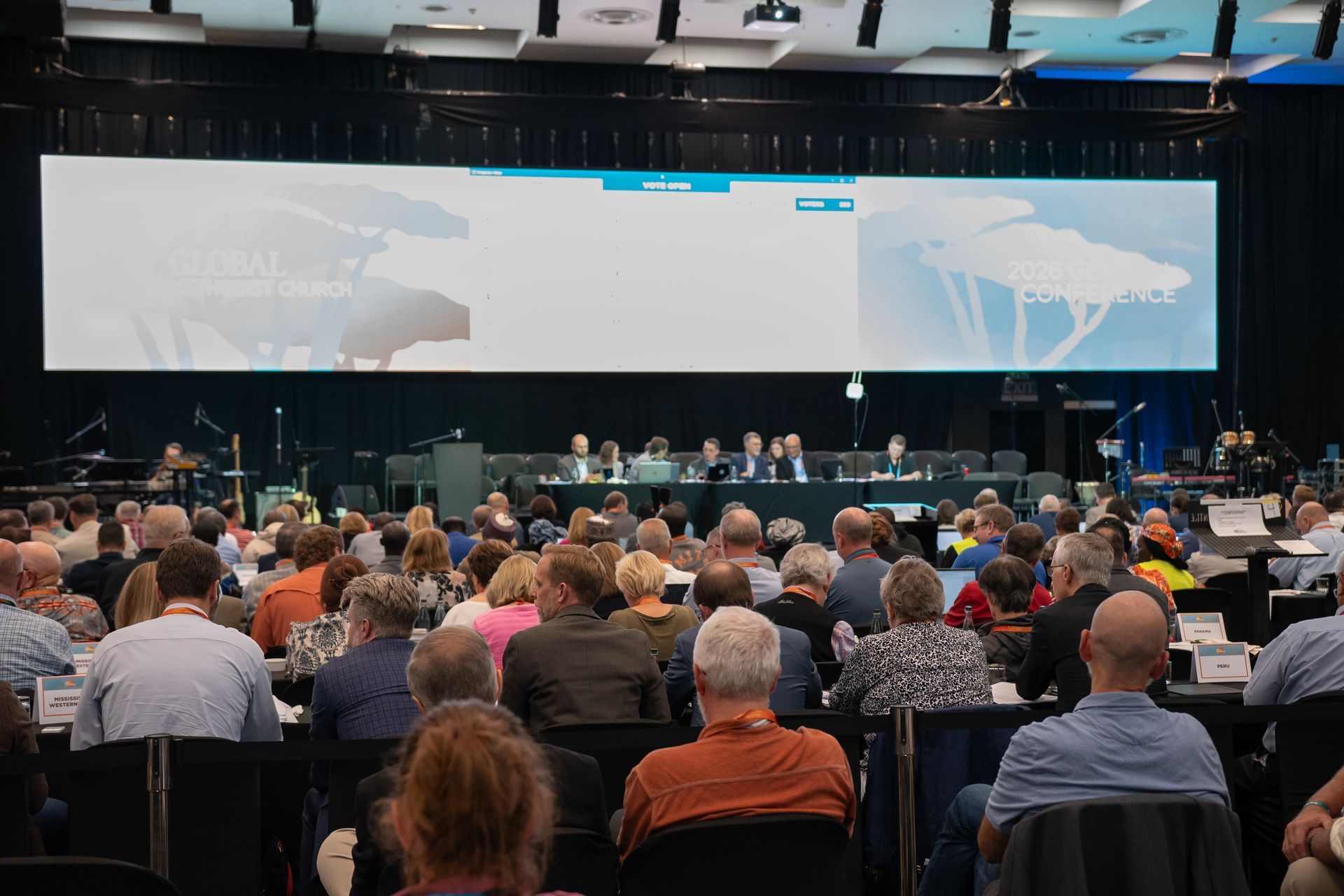
The Connectional Council has approved a plan to hold legislative committee meetings in person and on-site at the General Conference in 2026. This will provide a much superior experience, as face-to-face meetings are more fruitful than virtual ones. It means we will not have to contend with poor internet connections and accommodating drastic time zone differences. To accommodate this change, the conference will be lengthened from five days to seven.
The original plan had been to hold legislative committee meetings online through the summer of 2026 and limit the in-person General Conference to plenary sessions only. This plan was adopted by the 2024 General Conference in San Jose, Costa Rica, as part of the Plan of Organization for 2026. At that time, the Commission was operating under the information that none of the venues under consideration could accommodate in-person and on-site meetings of the legislative committees.
As planning continued following the 2024 General Conference, it became necessary for the Commission to consider other locations and venues than the ones originally contemplated. Several of these new venues did have room to accommodate legislative committee meetings, and after visits to the venues, the Commission made the recommendation to expand the General Conference from five days to seven, in order to include the legislative committee meetings.
The original plan for virtual legislative committee meetings was our attempt to make do with a less-than-ideal situation. The Commission welcomed the opportunity to include in-person meetings, as they believe it will be a much better experience for everyone. Following the Connectional Council’s approval of the change, General Conference delegates were polled, and 97 percent of those responding favored the move to a longer conference with in-person legislative committee meetings.
The good news is that this change is not expected to increase the cost of the General Conference. The budget has been adjusted accordingly to accommodate the expanded schedule while ensuring responsible financial stewardship.
Revised Deadlines and Timeline
Besides providing a better experience for everyone, the change to in-person meetings will have dramatic effects on the timeline and deadlines in the original Plan of Organization.
- The original deadline for electing delegates to the General Conference was 300 days prior to the General Conference. Now, the deadline for electing and certifying delegates to the General Conference will be 150 days prior to the General Conference. This will allow conferences still forming outside the U.S. more time to organize and elect delegates. Most existing conferences will still elect delegates in 2025, based on projected delegate numbers that will be published on April 1, 2025 (see below).
- The original deadline for submitting petitions was 270 days prior to the General Conference. Now, the deadline will be 120 days prior to the General Conference.
- The various administrative committees of the General Conference can now be formed 60 days later than originally planned.
- Originally, legislative committees were to be formed 240 days prior to the General Conference. Now, they will be formed 90 days prior.
Under the new plan, legislative committees will meet once virtually about a month to six weeks before the General Conference. These meetings will allow the legislative committee members to introduce themselves and elect committee officers. The meeting will also include parliamentary procedure training in our rules of order. Having this meeting early will enable the committee officers to be trained prior to the General Conference, and they can begin organizing the committee’s work in advance, so the committees can begin work immediately when meeting on site.
The revised Plan of Organization and Covenant adopted by the Connectional Council is posted online here .
All the linked documents included in this article are available in all six official languages of the Global Methodist Church. You can access them here .
Key Delegate Allocation Details
To support annual conferences in planning and preparing for their delegation process, the Global Methodist Church is providing key information regarding delegate selection and certification timelines.
- April 1, 2025 – The Commission has set the total number of delegates between 380 and 420. Each annual conference will be sent its projected total to allow for elections, but this will not be the final official total . Most annual conferences will have approximately the same number of delegates in 2026 as they did in 2024. Annual conferences are encouraged to elect delegates in 2025 to facilitate the visa process and early planning. Electing a few extra reserve delegates will provide flexibility in case the final allocation in 2026 increases their delegation size.
- April 1, 2026 – Deadline for annual conferences to elect and certify their delegates to the General Conference Commission.
The allocation process is guided by key values ensuring:
- Fair representation of all constituencies based on geography, demographics, and linguistic diversity.
- Data-informed decision-making to reflect the growth and development of the Global Methodist Church.
- Financial stewardship to ensure a feasible and sustainable General Conference.
- Transparency and clarity to foster trust and alignment among all stakeholders.
Resources outlining the range of delegate numbers , allocation values , and selection process can be viewed here.
Looking Ahead to the 2026 General Conference
The Global Methodist Church remains committed to hosting a well-organized and impactful General Conference that reflects its mission:
“To make disciples of Jesus Christ and spread scriptural holiness across the globe.”
We are especially looking forward to hosting the 2026 General Conference in Africa, continuing to honor the global nature of our connection and celebrating the diverse and growing body of believers within the GMC.
Financial Support for This Historic Event
Annual conferences, churches, and individuals who are interested in helping financially support this historic event can do so online by visiting this link and selecting “General Conference” under the fund selection. If you prefer to give by check, please include the downloadable form that can be accessed on our website to ensure proper designation to the General Conference.
Checks should be made payable to “Global Methodist Church” and mailed to:
Global Methodist Church
P.O. Box 1360
King George, VA 22485
For online gifts of $5,000 or more, please email finance@globalmethodist.org to confirm your donation. Our provider will not process large gifts without confirmation from our team that the gift is legitimate.
If you have any questions about fund options, please don’t hesitate to reach out to us by email at finance@globalmethodist.org or call 540-898-4960 .
Stay tuned to our social media pages and watch for email announcements as we share exciting updates, including the location, dates, theme, and other important details in the coming weeks!
The post 2026 General Conference Planning Update first appeared on Making Disciples of Jesus | The Global Methodist Church.
Related Posts